


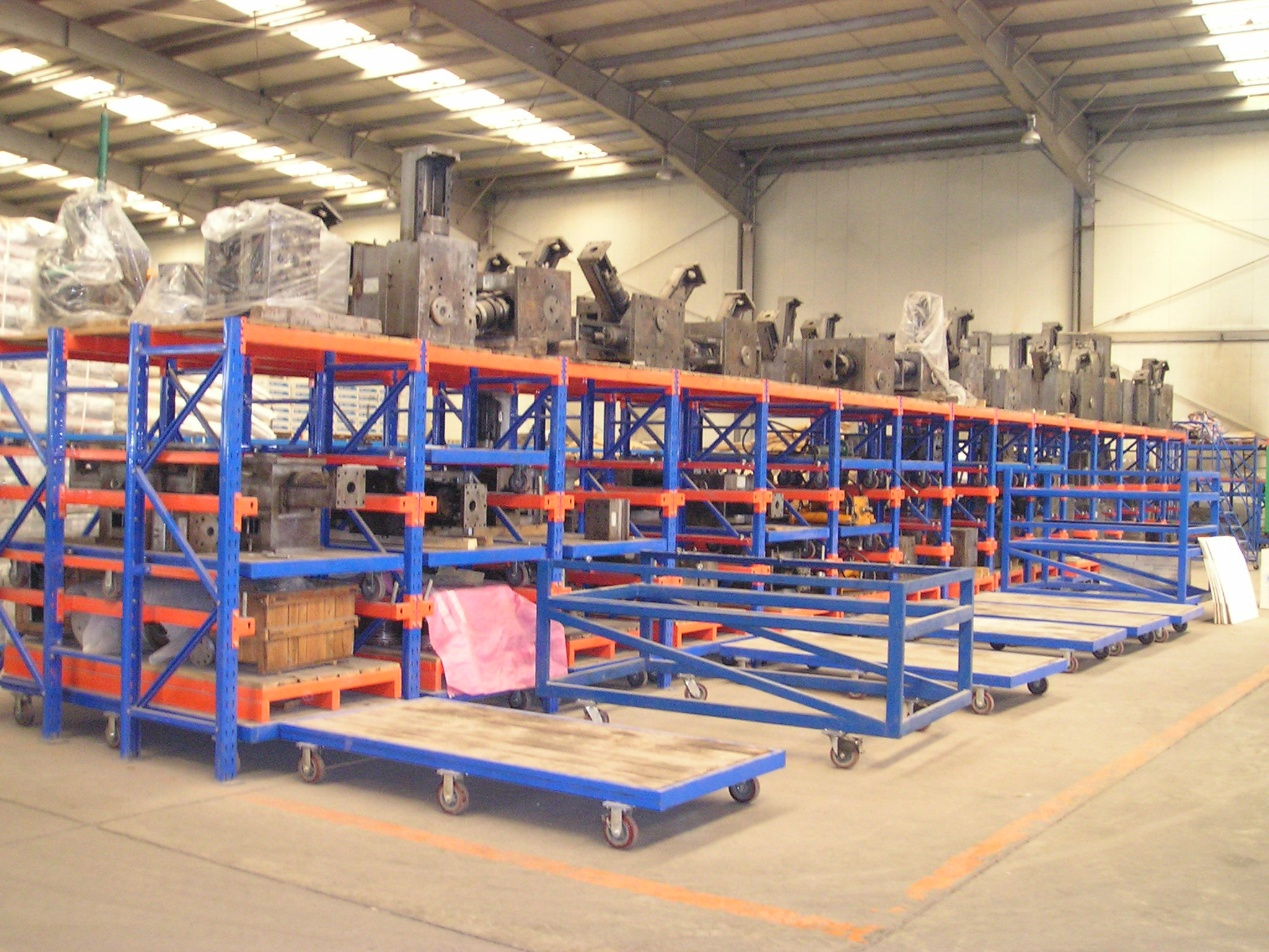
It happens too often in manufacturing facilities: a $50,000 injection mold gets damaged during storage. A $75,000 die shows premature wear. A $120,000 stamping tool develops alignment issues. Not because of production use, but because of improper storage between production runs.
In the manufacturing world, molds and dies represent some of the largest capital investments a company makes. Yet these precision-engineered assets worth tens or even hundreds of thousands of dollars often end up stored in makeshift solutions that wouldn’t be considered adequate for items a fraction of their value.
The True Cost of Inadequate Mold Storage
When I visited a plastics manufacturer in Michigan last year, their tooling manager pointed to a damaged mold corner. “That little ding? It cost us $18,700 to repair and three weeks of production delays.” The cause? The mold had been temporarily stored on an improvised rack that collapsed under the weight.
The numbers tell the sobering story:
- Average repair cost for damaged tooling: $9,000-$22,000
- Typical production downtime during repair: 1-3 weeks
- Average cost of emergency repairs (including expediting): 40% higher than planned maintenance
- Reduction in tool lifespan due to improper storage: 15-30%
When you factor in lost production time, rush repair charges, and shortened tool life, inadequate storage isn’t just an organizational issue—it’s a significant financial liability.
Beyond Physical Damage
The risks extend beyond obvious physical damage. Precision tooling faces multiple threats during storage:
Misalignment Issues: Even minor settling or pressure points during storage can affect a mold’s critical dimensions, leading to quality issues that might not be immediately apparent.
Corrosion and Contamination: Without proper environmental protection, valuable mold surfaces can deteriorate even while sitting idle.
Location Inefficiency: When tools are difficult to locate or access, every tooling change incurs hidden costs in labor time and production delays.
One automotive parts supplier tracked their tooling-related downtime for six months. The surprising finding? Over 22% of their production interruptions stemmed not from tool failures during operation, but from issues that developed during storage or from inefficient retrieval processes.
The ROI of Purpose-Built Storage
When manufacturing operations invest in proper mold storage systems, the returns become evident quickly. Consider these real-world examples:
A medical device manufacturer installed a comprehensive mold rack system for their 87 high-precision injection molds. Within 18 months, they documented:
- 94% reduction in storage-related damage
- 67% decrease in retrieval time
- 22% improvement in overall tool lifespan
- Complete ROI achieved in just 11 months
Similarly, a consumer electronics contract manufacturer reorganized their die storage with dedicated racks. Their toolroom supervisor reported: “We used to budget for replacing at least two major tools annually due to handling and storage damage. In the two years since our rack installation, we haven’t had to replace a single one.”
The Elements of Effective Mold Storage
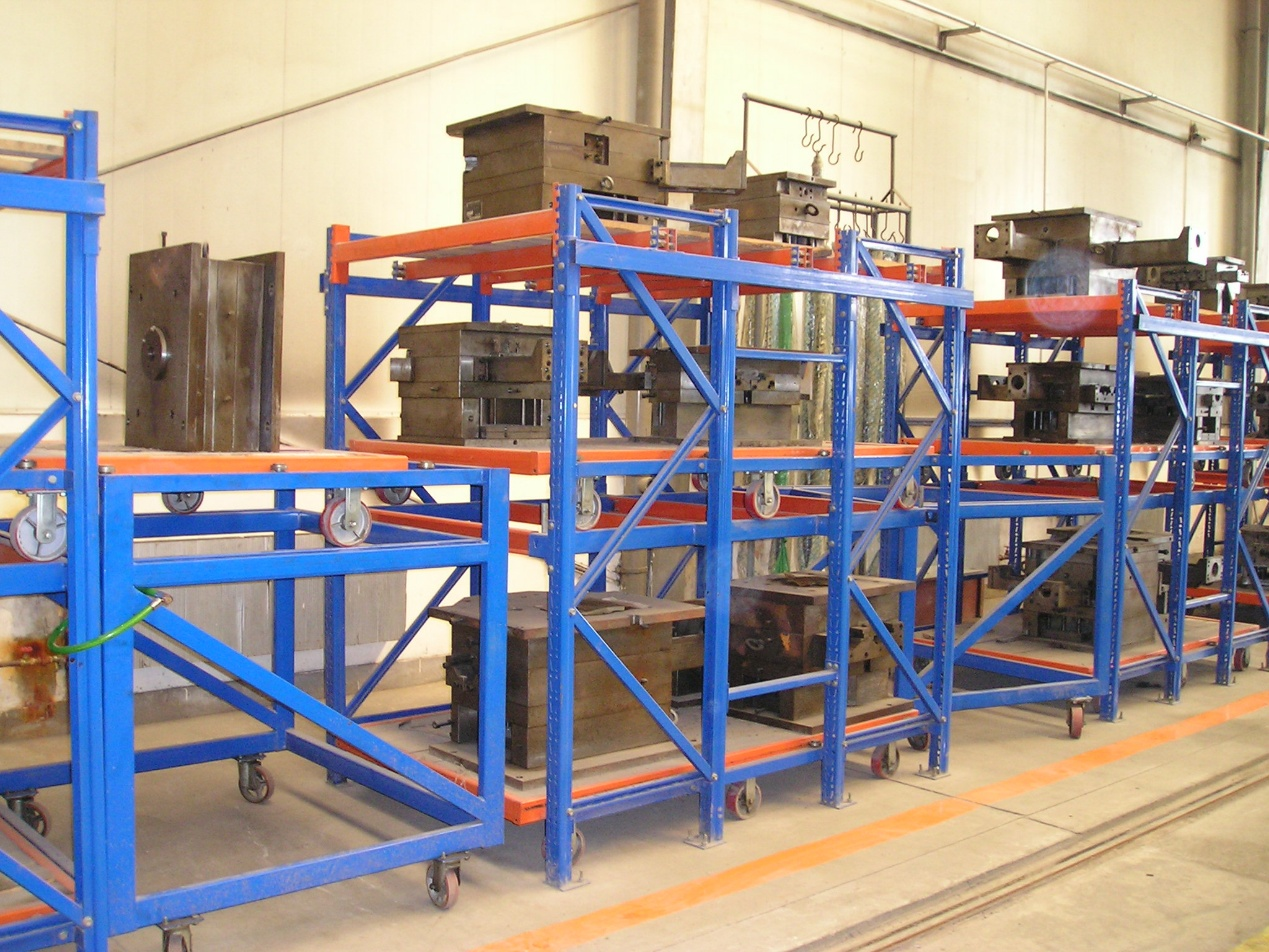
What separates adequate storage from exceptional protection for your valuable assets?
Engineered Weight Capacity: Quality mold racks are designed specifically for the extreme weights involved, with appropriate safety factors and load distribution.
Proper Support Points: Unlike general-purpose shelving, purpose-built mold racks support tooling at appropriate points to prevent warping or stress.
Accessibility Design: Well-designed systems enable direct access without moving multiple tools to reach the needed item.
Protection Features: From edge guards to appropriate spacing, dedicated racks incorporate features that minimize contact damage.
Identification Systems: Integrated labeling and organization features reduce handling time and errors.
The Calculation You Need to Make
For operations still using improvised storage solutions, the decision to upgrade should be approached as a straightforward financial calculation:
- Value of your tooling inventory
- Annual cost of repairs attributable to storage/handling
- Production time lost to damaged/difficult-to-locate tooling
- Anticipated lifespan reduction of current tools
- Cost of appropriate storage solutions
A die casting company in Ohio ran this analysis and discovered their annual storage-related costs exceeded $175,000—nearly five times the investment required for a complete storage system upgrade.
Beyond the Numbers
The benefits extend beyond direct financial returns. Proper mold storage creates:
Enhanced Safety: Reduced risk of workplace injuries from improper handling or storage collapse.
Improved Quality: Tools that maintain their precision during storage produce better parts with less variation.
Faster Response Times: When molds are properly organized and accessible, production changeovers happen faster, improving customer responsiveness.
Better Asset Utilization: With improved tracking and access, businesses can more effectively manage their tooling inventory and make better decisions about repairs versus replacements.
The Simple Truth
The reality is straightforward: when your molds and dies represent investments of tens or hundreds of thousands of dollars, storing them on anything less than purpose-built racks isn’t just disorganized—it’s fiscally irresponsible.
As one production manager put it: “We wouldn’t store our finished products in ways that damage them. Why would we do that with the tools that make them?”
Protecting Your Million-Dollar Assets
Your molds and dies are more than just production tools—they’re the physical embodiment of your product designs and manufacturing capabilities. They deserve storage solutions engineered with the same precision that went into their creation.
Ready to protect your valuable tooling investments? Our mold rack systems are specifically designed to preserve the integrity, accessibility, and longevity of your high-value assets.
Contact us today for a personalized assessment of your tooling storage needs. Because the only thing more expensive than proper mold storage is improper mold storage.