


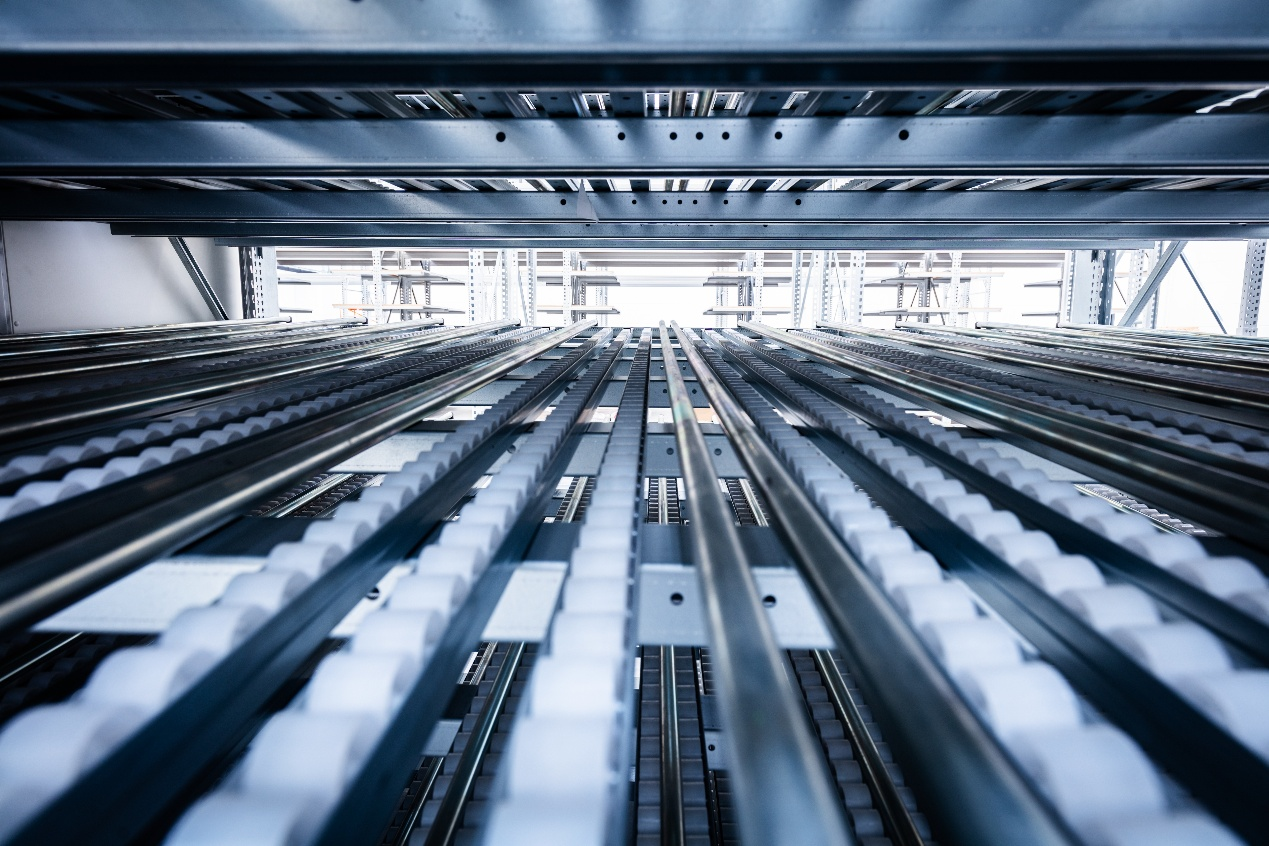
In today’s competitive business environment, warehouse efficiency isn’t just a nice-to-have—it’s essential for maintaining profitability and meeting customer expectations. With numerous storage options available, from basic shelving to sophisticated automated systems, choosing the right solution can significantly impact your operation’s productivity and bottom line. This article explores when and why carton flow rack systems emerge as the superior choice compared to other traditional warehouse storage methods.
Understanding Your Storage Options
Before diving into comparisons, let’s briefly review the main types of warehouse storage systems commonly used today:
Traditional Static Shelving
Simple metal or wire shelving units with fixed horizontal surfaces for storing products. Items are typically accessed from the aisle side only.
Pallet Racking
Designed for storing palletized materials, these systems can be configured in various ways (selective, drive-in, push-back) to accommodate different operational needs.
Mobile Shelving
Shelving units mounted on carriages that move along tracks, eliminating fixed aisles and increasing storage density.
Carton Flow Rack Systems
Angled shelving with rollers or wheels that allow cartons to flow from the loading side to the picking side, utilizing gravity to facilitate product movement and FIFO (First-In-First-Out) inventory management.
When Carton Flow Racks Shine: Key Scenarios
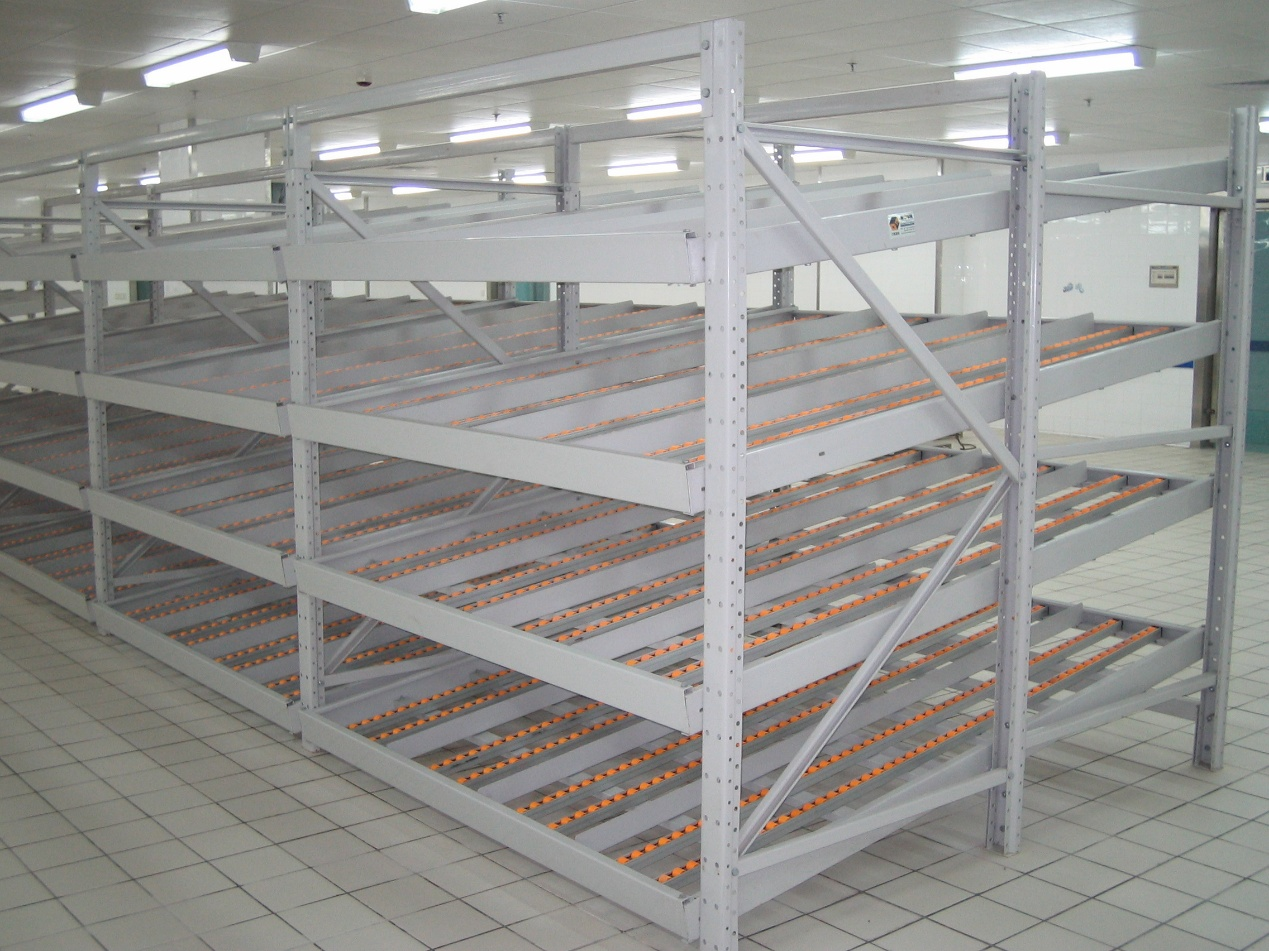
- High-Volume Pick Operations with Many SKUs
Challenge with Traditional Systems: In operations with numerous SKUs and frequent picking, static shelving requires pickers to travel extensively between locations, while pallet racking often wastes vertical space when storing smaller items.
Carton Flow Advantage: Carton flow racks concentrate multiple SKUs in a compact footprint, significantly reducing travel time between picks. One study showed that implementing carton flow racks can reduce picking time by up to 40% compared to static shelving systems in high-SKU environments.
- FIFO Inventory Management Requirements
Challenge with Traditional Systems: Maintaining proper FIFO rotation with static shelving requires disciplined manual rotation of stock, which is time-consuming and error-prone. Pallet racks often make FIFO difficult to implement without complex double-handling.
Carton Flow Advantage: The gravity-fed design inherently enforces FIFO inventory management—new stock is loaded from the rear while picking occurs from the front. This is particularly valuable for:
- Perishable goods with expiration dates
- Products with serial number traceability requirements
- Industries with strict regulatory compliance needs
- Space-Constrained Facilities
Challenge with Traditional Systems: Static shelving requires wide aisles on both sides for loading and picking, while typical selective pallet racking requires significant aisle space for forklift maneuverability.
Carton Flow Advantage: By separating loading and picking aisles, carton flow systems require fewer total aisles. This configuration can increase storage density by 30-50% compared to traditional static shelving arrangements while maintaining 100% SKU accessibility.
- Labor Optimization Priorities
Challenge with Traditional Systems: Traditional systems often require more labor for stock rotation, involve longer travel distances between picks, and can cause congestion when restocking and picking occur simultaneously.
Carton Flow Advantage:
- Separation of picking and restocking activities eliminates worker interference
- Reduced picker travel time through denser storage
- Improved ergonomics with products presented at the pick face
- Reduced labor requirements for stock rotation
- High-Turnover Inventory
Challenge with Traditional Systems: High-turnover items in static shelving require frequent restocking interruptions, while pallet systems are often inefficient for smaller, fast-moving items.
Carton Flow Advantage: Multiple cases of the same SKU can be loaded at once, reducing restocking frequency. The typical carton flow lane can hold 12-15 cases of product, meaning restocking occurs far less frequently than with flat shelving.
Cost-Benefit Analysis: The Investment Perspective
While carton flow rack systems typically require a higher initial investment than basic shelving, the ROI calculation extends beyond the purchase price:
| System Type | Initial Cost | Space Efficiency | Pick Efficiency | FIFO Compliance | Labor Requirements |
| Static Shelving | Low | Low | Low | Poor | High |
| Selective Pallet Rack | Medium | Medium | Low | Poor | Medium |
| Carton Flow Rack | High | High | High | Excellent | Low |
Real-World Example: A distribution center handling 5,000 SKUs converted from static shelving to carton flow racks and experienced:
- 35% reduction in required floor space
- 42% improvement in picking efficiency
- 27% reduction in labor costs
- 15% reduction in inventory holding costs due to improved rotation
The system paid for its cost differential within 14 months.
When Other Systems Might Be Preferable
While carton flow racks offer significant advantages in many scenarios, they’re not always the optimal choice:
- Very low-turnover items:Products picked less than once per month may not justify the investment in carton flow.
- Extremely heavy or awkwardly shaped items:Some products may not flow properly on rollers or exceed weight capacities.
- Ultra-light picking operations:Operations with minimal daily picks may achieve adequate efficiency with simpler systems.
- Extremely limited budget:When initial capital is severely constrained, starting with static shelving may be necessary despite long-term inefficiencies.
Implementation Considerations
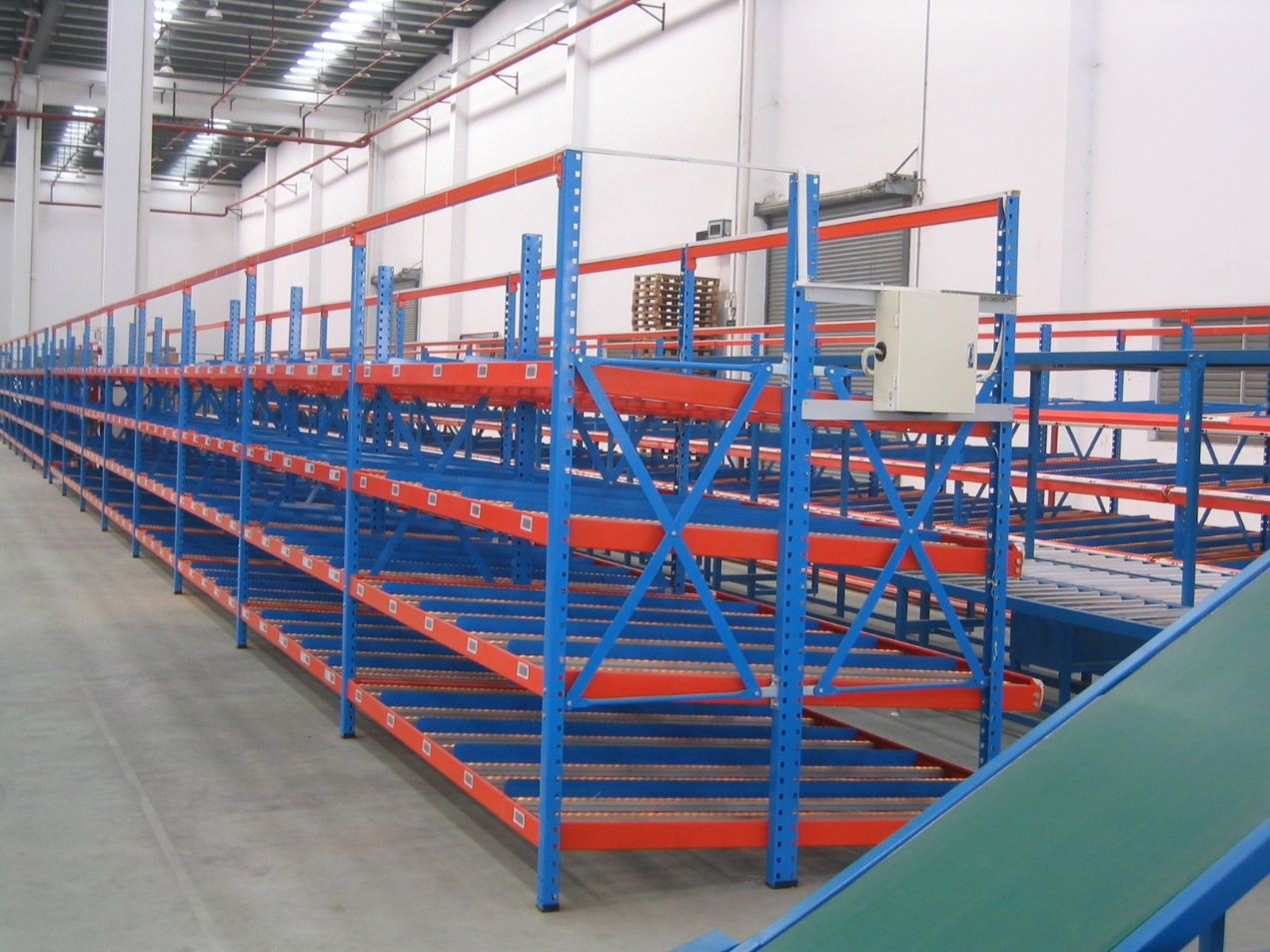
If you’re considering a switch to carton flow racks, several factors will influence successful implementation:
- Product analysis:Evaluate dimensions, weights, and container types to ensure compatibility
- Pick frequency data:Analyze your order patterns to identify high-velocity SKUs that would benefit most
- Space planning:Consider aisle requirements, loading areas, and overall facility layout
- Slotting strategy:Plan optimal product placement based on picking frequency and complementary items
Conclusion
While no single storage solution works best for every warehouse operation, carton flow rack systems provide compelling advantages for high-SKU, high-turnover operations where space efficiency, labor optimization, and inventory control are priorities. By understanding when these systems outperform traditional alternatives, warehouse managers can make informed decisions that balance initial investment against long-term operational benefits.
The key to warehouse optimization isn’t necessarily choosing the most advanced system for every application, but rather selecting the right tool for each specific operational challenge. For many distribution centers, carton flow racks represent the sweet spot where improved efficiency justifies the investment, particularly as labor costs rise and customer expectations for rapid fulfillment intensify.