


In the world of warehouse storage, choosing the right system can significantly impact operational efficiency, space utilization, and ultimately, your bottom line. Two of the most common storage solutions—longspan shelving and selective pallet racking—serve different purposes and excel in different environments.
This guide will help you determine which system is right for your specific needs, or whether a combination of both might be the optimal solution for your warehouse.
Understanding the Basics
Before diving into comparisons, let’s establish what each system is designed to do.
Selective Pallet Rack
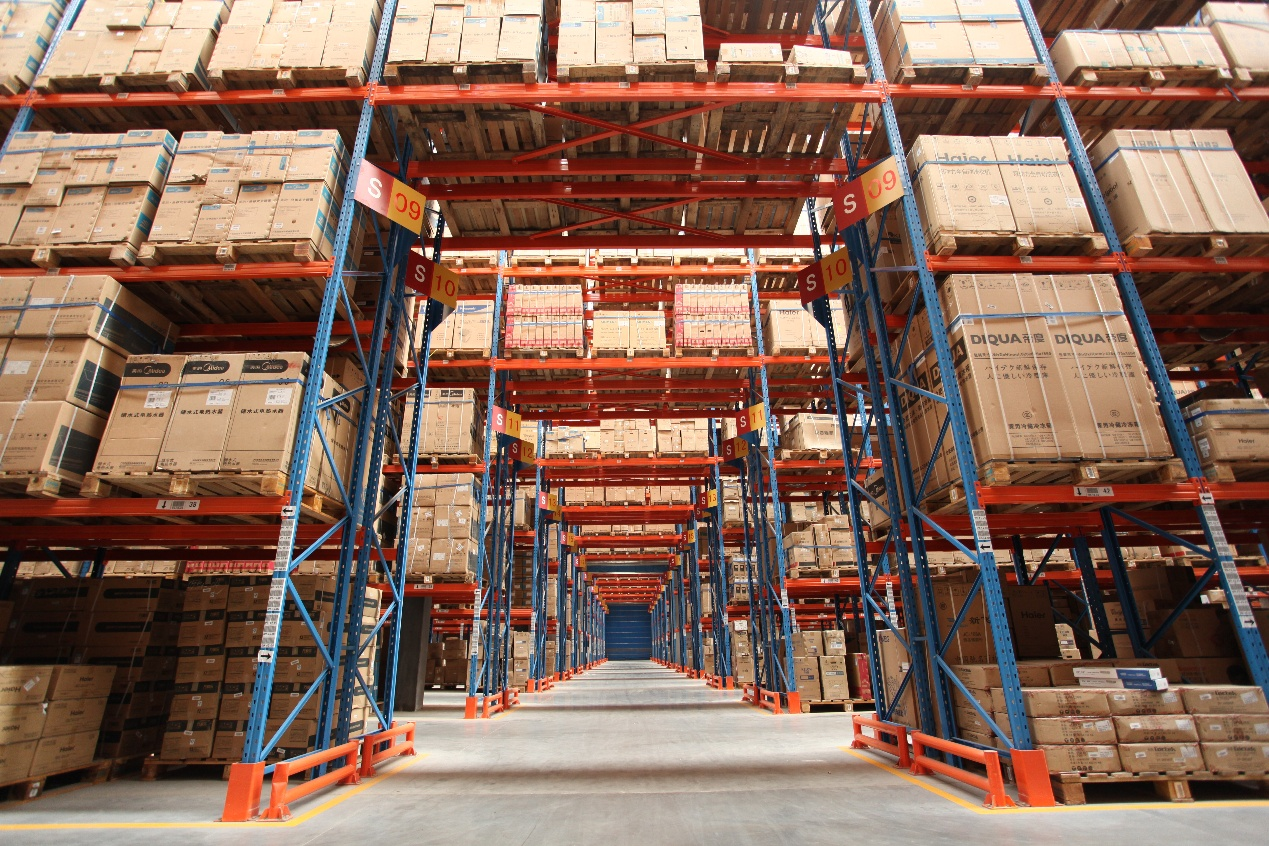
Selective pallet racking is the most common pallet storage system in warehouses worldwide. It features upright frames connected by horizontal beams that create levels for storing palletized goods. Its primary purpose is to store heavy, palletized inventory that requires forklift access.
Key characteristics:
- High weight capacity (typically 2,000-4,000 kg per level)
- Designed specifically for palletized loads
- Requires forklift access
- Offers 100% selectivity (any pallet can be accessed without moving others)
- Utilizes vertical space efficiently
Longspan Shelving
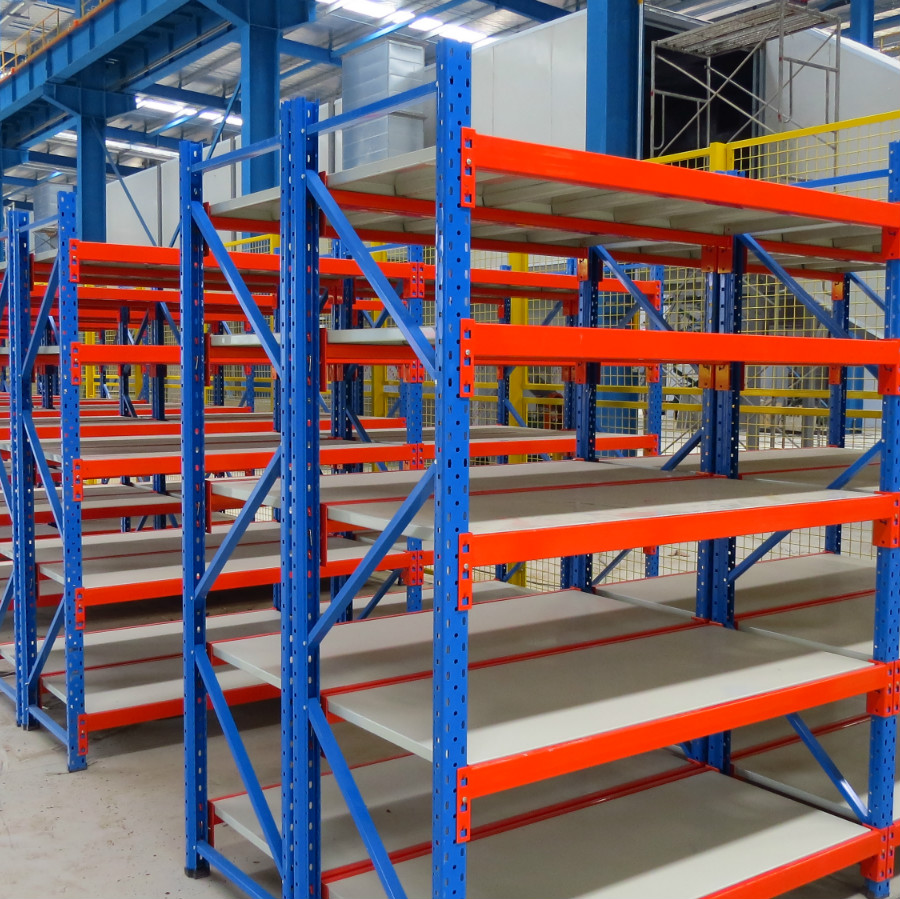
Longspan shelving bridges the gap between light-duty shelving and heavy-duty pallet racking. It consists of upright frames connected by horizontal beams, with shelf panels creating a continuous storage surface. It’s primarily designed for hand-loaded items too heavy for standard shelving but too small for full pallet storage.
Key characteristics:
- Moderate weight capacity (typically 600-1,000 kg per level)
- Designed for boxed goods, loose items, or smaller components
- Primarily accessed by hand (sometimes with the aid of ladders or order pickers)
- Highly adjustable shelf spacing
- More shelves per vertical space compared to pallet racking
Critical Decision Factors
- Load Characteristics
Choose Selective Pallet Rack if:
- Your inventory is primarily stored and moved on standard pallets
- Individual items weigh more than 25 kg and require mechanical handling
- Products are typically stored and picked in full pallet quantities
- You store bulk quantities of fewer SKUs
Choose Longspan Shelving if:
- Your inventory consists of individual boxes or items under 25 kg
- Products are frequently picked individually rather than in full pallets
- You have many different SKUs in smaller quantities
- Items vary significantly in size but are generally manageable by hand
- Access Equipment
Choose Selective Pallet Rack if:
- You already utilize forklifts or reach trucks in your operation
- Your team is trained in powered equipment operation
- Your facility has adequate space for equipment maneuvering
- You need to store products at heights above 2.5 meters
Choose Longspan Shelving if:
- Your operation primarily relies on manual picking
- You want to avoid the cost of forklifts and trained operators
- Your facility has space constraints that limit equipment use
- You can contain most storage within a 2.5-meter height (or use rolling ladders/order pickers for occasional higher access)
- Space Utilization
Choose Selective Pallet Rack if:
- You have high ceilings (6+ meters) and want to maximize vertical storage
- You have the space for wide aisles (3-4 meters) required for forklift operation
- Your priority is maximum storage density for palletized goods
- Your operation can accommodate less dense storage in exchange for 100% accessibility
Choose Longspan Shelving if:
- You need narrower aisles (as little as 1-1.5 meters) for manual access
- You want to store more diverse products in a given footprint
- You need more shelves per vertical meter
- Your ceiling height is lower (under 6 meters) and doesn’t justify full pallet racking
- Inventory Characteristics
Choose Selective Pallet Rack if:
- You have lower SKU counts but higher quantities per SKU
- Your inventory turnover is relatively slow or moderate
- Products are uniform in size and typically palletized when received
- You frequently receive and ship full pallets
Choose Longspan Shelving if:
- You have high SKU counts with lower quantities per SKU
- Your inventory turnover is rapid
- Products vary significantly in size and shape
- You typically break down pallets upon receiving for individual storage
- Operational Flexibility
Choose Selective Pallet Rack if:
- Your storage needs are relatively stable and predictable
- You want a permanent, heavy-duty solution
- Your primary concern is maximum load capacity
- You’re willing to invest in a more robust, longer-term storage system
Choose Longspan Shelving if:
- Your storage needs change frequently
- You want a system that’s easier to reconfigure as needs evolve
- You prioritize flexibility over maximum capacity
- You need a solution that can be easily modified by your own staff
- Cost Considerations
Choose Selective Pallet Rack if:
- You’ve already invested in forklift equipment and trained operators
- Your high-volume storage justifies the higher initial investment
- The value or nature of your inventory requires palletized storage
- You’re planning for long-term, heavy-duty usage
Choose Longspan Shelving if:
- You want to minimize initial equipment investment
- You want to avoid ongoing forklift maintenance and operator costs
- Your budget favors a more economical storage solution
- You want lower cost per SKU for varied inventory
Decision Flowchart: Which System Is Right for You?
- Start with your product characteristics:
- Are most items stored and moved on pallets? → Selective Pallet Rack
- Are items primarily handled individually by hand? → Longspan Shelving
- Consider your access methods:
- Do you already use forklifts regularly? → Selective Pallet Rack
- Is picking done primarily by hand? → Longspan Shelving
- Evaluate your weight requirements:
- Do shelf loads exceed 1,000 kg per level? → Selective Pallet Rack
- Are most loads under 1,000 kg per level? → Longspan Shelving
- Analyze your SKU profile:
- Fewer SKUs in large quantities? → Selective Pallet Rack
- Many SKUs in smaller quantities? → Longspan Shelving
- Consider your vertical space:
- Ceiling height over 6 meters? → Selective Pallet Rack advantage
- Ceiling height under 6 meters? → Either system works, but longspan may be more practical
Hybrid Solutions: Getting the Best of Both Worlds
Many warehouses benefit from implementing both systems for different areas or functions. Consider these hybrid approaches:
- Zone-Based Implementation:
- Use selective pallet racking in receiving and bulk storage areas
- Use longspan shelving in picking and assembly areas
- This combination optimizes both bulk storage and order fulfillment
- Vertical Optimization:
- Use selective pallet rack for lower levels (easy forklift access)
- Use longspan shelving for upper levels (accessed less frequently or with order pickers)
- This maximizes both access efficiency and storage density
- Product-Based Segregation:
- Use selective pallet rack for high-volume, palletized products
- Use longspan shelving for diverse, individually-picked items
- This tailors your storage to specific product characteristics
- Flow-Based Integration:
- Receive and store in selective pallet rack
- Transfer to longspan shelving for order fulfillment
- This creates an efficient workflow from receiving to shipping
Case Studies: Real-World Applications
Scenario 1: E-Commerce Fulfillment Center
A growing online retailer with 5,000+ SKUs implemented a hybrid solution:
- Selective pallet racking in their receiving area for bulk storage
- Longspan shelving in their picking area for efficient order fulfillment
- Result: 40% increase in picking efficiency and 30% reduction in warehouse footprint
Scenario 2: Manufacturing Components Storage
A manufacturing operation storing both raw materials and finished goods chose:
- Selective pallet rack for raw material storage (heavy, palletized items)
- Longspan shelving for component storage and kitting operations
- Result: 35% reduction in assembly time by having components organized on accessible longspan shelving
Scenario 3: Distribution Center Transformation
A distribution center handling both wholesale and retail orders implemented:
- Selective pallet rack for wholesale orders (full pallets)
- Longspan shelving for retail order fulfillment (individual items)
- Result: Ability to serve both customer types from the same facility with optimized operations for each
Making Your Final Decision
When deciding between longspan shelving and selective pallet racking, consider these final questions:
- What are your primary storage goals?
- Maximum storage density? Selective pallet rack may be better
- Maximum picking efficiency? Longspan shelving may be preferable
- Best of both? Consider a hybrid solution
- What is your five-year growth projection?
- Will your product mix change significantly?
- Will your order profiles evolve?
- Choose the system (or combination) that accommodates future needs
- What is your budget reality?
- Consider not just the initial investment but total cost of ownership
- Factor in equipment, maintenance, training, and operational costs
- Remember that the right system pays for itself in operational efficiency
- What are your facility constraints?
- Ceiling height, floor capacity, column spacing
- Entry points, loading areas, and material flow
- Safety requirements and regulations
Conclusion
Both longspan shelving and selective pallet racking have their place in modern warehouse operations. The right choice depends on your specific inventory characteristics, operational needs, and business goals. Many operations find that a strategic combination of both systems provides the optimal solution.
By carefully analyzing your needs using the guidelines in this article, you can make an informed decision that enhances your warehouse efficiency, maximizes your available space, and ultimately contributes to your bottom line.
Remember that storage systems are not just metal structures—they’re the foundation of your operational efficiency. Choose wisely, and your warehouse will function as a strategic asset rather than just a cost center.
Need help determining the right storage solution for your specific needs? Our storage experts can conduct a detailed analysis of your operation and recommend the optimal configuration. Contact us today for a consultation.